Category: <span>Industry News</span>
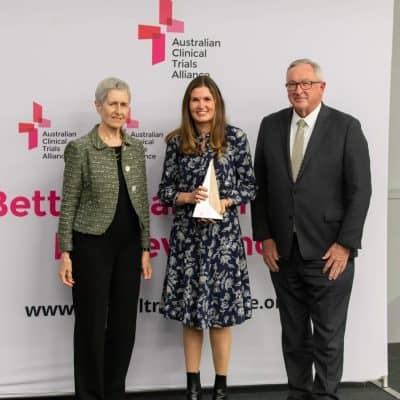
From a national pool of exceptional collaborative, multicentre, investigator-driven, and impactful trial nominations, four major awards were presented on Friday 20 May for trials demonstrating significant and positive impacts for patients.
The ACTA Clinical Trials National Tribute and Awards were established in 2016 to highlight the outstanding Australian achievements that advance clinical practice and save or improve the lives of patients every year.
The 2022 ACTA award winners were:
Winner – ACTA Trial of the Year Award
REMAP-CAP: Randomised, Embedded, Multifactorial Adaptive Platform trial for Community-Acquired Pneumonia This trial employed a novel design to simultaneously evaluate potential treatments, and efficiently and rapidly generate evidence, which had a significant impact on the care of critical patients during the COVID-19 pandemic.
Other award winners are as follows:
Winner – ACTA STInG Excellence in Trial Statistics Award
The PADDI Trial: The Perioperative Administration of Dexamethasone and Infection – The PADDI Trial This trial presented that dexamethasone can be safely administered to patients to prevent nausea and vomiting when undergoing surgery, without concern about wound infections.
Winner – ACTA Consumer Involvement Award
EMPOWER-SMS: Text messages to improve women’s self-efficacy, quality of life and health outcomes after breast cancer treatment: EMPOWER-SMS randomised clinical trial This trial evaluated the reach and usefulness of a lifestyle-focused text message intervention to support women’s mental and physical health after breast cancer treatment.
Winner – ACTA Industry Partnership Award
Better Knee, Better Me: Effectiveness of two scalable health care interventions supporting self-management for knee osteoarthritis – a randomized controlled trial This partnership, between the University of Melbourne and Medibank, saw the design and evaluation of two new programs for people with knee osteoarthritis, which were highly rated by participants and health professionals for their effectiveness, simplicity and convenience.
ACTA CEO, Dr Stewart Hay shared: “The caliber and breadth of our 2022 award winners and nominees illustrates the expertise, experience and enthusiasm for conducting clinical trials in Australia. As an industry body, ACTA is committed to supporting and advocating for trial teams to ensure they can continue their great work in providing the community with access to life-changing trials. These awards provide yet another reminder why our work is so important for the sector and patient care.”
Visit the ACTA website for full details of this year’s winners.
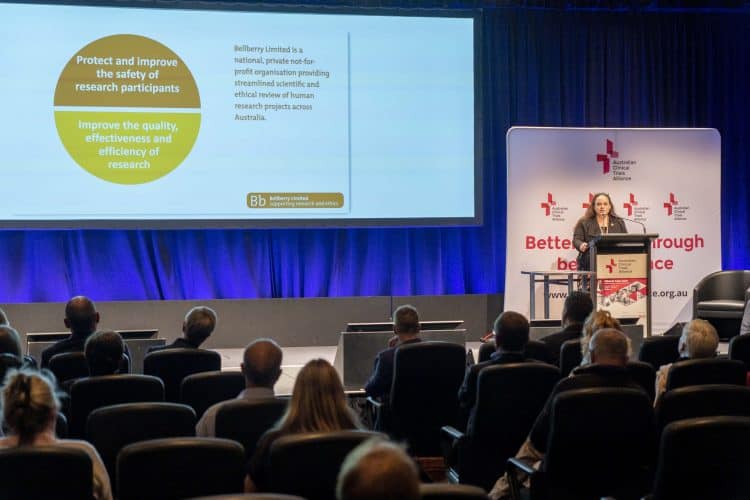
On International Clinical Trials Day, we’re proud to publish the Bellberry Clinical Trial Activity Report 2021. This second annual publication represents a significant proportion of the Australia wide CTN trial activity across the development lifecycle. It demonstrates capability and capacity in a broad range of research areas. The report also captures the originating funding location for inward investment in Sponsored clinical trials, again demonstrating Australia’s active participation in the global development process.
In this reporting period Bellberry was also delighted to become the first Australian organisation to achieve accreditation by the global Association for the Accreditation of Human Research Protection Programs (AAHRPP).
If you have any questions relating to this data, please contact us at bellberry@bellberry.com.au
Click here to register and download the Bellberry Clinical Trial Activity Report 2021
The Trustees of the Sylvia and Charles Viertel Charitable Foundation have announced two classes of research grants to be awarded in 2022 and commencing in 2023.
Senior Medical Research Fellowship
The Senior Medical Research Fellowship are intended to be amongst the most prestigious awards available to those who wish to continue a career in medical research in Australia. The Fellowship is an integral part of a scheme that is intended to provide both salary and project grant support for outstanding Australian medical researchers. It has a five-year tenure at $275,000 p.a. for a researcher from any discipline in medical science to be awarded in 2022 and commencing in 2023.
Viertel Clinical Investigator awards
$90,000 is available for a clinical researcher who has recently completed their clinical and research training and is commencing their first substantive appointment (appointment of 5 years or more) clinical position or has been in such a post for no more than 36 months on 30 April. Up to five awards available this year.
The Foundation intends to award at least one (1) award to an eligible female candidate in both classes. Only Australian nationals or permanent residents are eligible for these awards.
A reminder that the closing date for both awards is 30 April 2022.
Further information, including eligibility requirements and application forms, is available from The Viertel Charitable Foundation website
ACTA has launched a new Industry Partnership Award in recognition of the important role that industry plays in Australian clinical trials.
Open to Members and non-members, the Industry Partnership Award will celebrate a significant collaboration between an industry company and a team of academic investigators uniting to conduct a high-impact clinical trial.
The winner of this new award will be publicly announced at ACTA’s National Tribute and Awards Ceremony, of which Bellberry are premium partners, held in Sydney on 20 May 2022 to coincide with International Clinical Trials Day. The annual awards honour Australians advancing our health system by designing, conducting, or participating in ground-breaking clinical trials and promote the importance of clinical trials and the expertise and complexity of the work involving trial teams, industry partners and consumers.
The closing date for nominations is midnight, Sunday 6 March 2022.
Visit ACTA for further information on the awards and to make your nomination.
We are delighted to announce that Bellberry-Viertel Fellow Prof Di Yu has been recognised by the Australian Academy of Health and Medical Sciences’ (AAHMS) with the Jian Zhou Medal. The Jian Zhou Medal is awarded to scientists working to battle breast cancer, autoimmune and infectious diseases who have been recognised for their outstanding discoveries.
Professor Yu was awarded in recognition of his landmark discoveries in revealing the differentiation and functions of T cells in human health and disease, research which has enabled new diagnosis and therapy for autoimmune, allergic and infectious diseases, and the improvement for vaccine efficacy.
Further information and details of the other award recipient can be found on the AAHMS website: https://aahms.org/news/scientists-honoured-with-jian-zhou-medals/
Breakthroughs in prostate cancer screening and a ‘watch and wait’ treatment for collapsed lung share the Australian Clinical Trials Alliance 2021 Trial of the Year Award The Australian Clinical Trials Alliance (ACTA) is pleased to announce dual winners of their preeminent 2021 ACTA Trial of the Year Award. This event celebrates the vital role trials have in advancing clinical practice and saving or improving patients’ lives every year. The dual winners of the 2021 Trial of the Year Award are:- ProPSMA Prostate-specific membrane antigen PET-CT in patients with high-risk prostate cancer before curative-intent surgery or radiotherapy (ProPSMA): a prospective, randomised, multicentre study.
- Pneumothorax study A randomised controlled trial of conservative versus interventional treatment for spontaneous pneumothorax.

Sometimes it is difficult to put feelings into words. They say a picture can tell a thousand words, so the White Coats Foundation is inviting you to express ‘Your Voice’ by creating a picture, painting, symbol or sending in a photo that represents what clinical trials mean to you.
Perhaps you are a patient that has benefited from participating in a clinical trial or a recipient of an approved medication that is available because of a clinical trial or a health care professional who supports patients on clinical trials or an industry professional who is witness to the impact that medical advances can bring to people’s lives. Whatever your circumstances, the White Coats Foundation want to hear your voice and see your story.
Submission open between 6 April and 3 May
The White Coats Foundation will select a shortlist of entries for further presentation at the White Coats Foundation “Your Voice, Your Story ” public webinar to be held on International Clinical Trials Day-20th of May.
Learn more here: https://whitecoatsfoundation.org/your-voice/
The Power of One campaign is run by the White Foundation. The Foundation was established in recognition of the need to raise awareness about the role of clinical trials in advancing medical science and healthcare.
Applications are now open for the Power of One 2021. The Foundation encourages applications that align with their annual research themes. This year’s grant is related to INDIGENOUS HEALTH programs that are either:
- Research for curative medicine and preventive health programs; or
- Programs designed to support consumer and community awareness or engagement in clinical trials.
Further information on the campaign can be found on the White Coats Foundation website
This year ACTA will be recognising the outstanding achievements of its members at their National Tribute and Award Ceremony being held on International Clinical Trials Day (20 May 2021).
The ACTA Trial of the Year Award was established in 2016 to recognise and celebrate the outstanding achievements of its Members, who advance clinical practice and save or improve the lives of patients every year through investigator-driven clinical trials.
If you know of a ground-breaking clinical trial published in 2020 (electronically or in print) by a current ACTA Member, ACTA encourages you to nominate it for the ACTA 2021 Trial of the Year Award. Further information can be found on the ACTA website
The deadline for nominations is Sunday 14 March.
Bellberry awarded AAHRPP accreditation
Bellberry has become the first organisation in Australia to achieve international accreditation for excellence and ethically sound processes in running Human Research Ethics Committees (HRECs).
The recognition has come from the Association for the Accreditation of Human Research Protection Programs (AAHRPP), which is based in the USA. The AAHRPP site accreditation team visited Australia to conduct an extensive review of Bellberry’s operations earlier this year.
Bellberry’s CEO Kylie Sproston has welcomed the news.
“This is a huge boost at a time when Bellberry is firmly focused on the safe continuation or adjustment of current clinical trial activities and the welfare of participants on those trials,” Ms Sproston said.
Elyse Summers, CEO and President of AAHRPP said that AAHRPP’s Council on Accreditation (Council) met (remotely) and awarded Bellberry full AAHRPP Accreditation.
“The site visit team and Council were highly impressed with Bellberry’s robust human research protections program (HRPP), which serves as an excellent model in Australia for the ethical review of and education about research involving human participants,” said Ms Summers.
Ms Sproston said, “The accreditation is testament to all the hard work undertaken by our staff, the broader Bellberry team, our HREC Community, and the researchers that we serve”.
The primary purpose of AAHRPP accreditation is to strengthen protections for research participants. However, the benefits of AAHRPP’s comprehensive approach extend beyond participants to the research enterprise as a whole. Each accreditation advances that objective and helps build public trust and confidence in research.
Long regarded as the gold standard, AAHRPP accreditation is becoming the norm for quality research programs in the US. All major U.S. independent institutional review boards (IRBs) are AAHRPP accredited. More than 60 percent of U.S. research-intensive universities and 65 percent of U.S. medical schools are either AAHRPP accredited or have begun the accreditation process.
AAHRPP-accredited organisations have been recognised to have more efficient operations, provide more comprehensive protections, and produce high-quality data. AAHRPP-accredited organisations also tend to have more streamlined, effective policies and procedures.
AAHRPP recently published their May newsletter which includes an article on Bellberrys accreditation: https://www.aahrpp.org/
Perth based not-for-profit clinical trial facility, Linear, got early warning on the seriousness of COVID-19 thanks to a staff member who was visiting China and staying in the province next to Hubei. The trained nurse who is the Head of China Business Development for Linear, not only played a crucial role in alerting the organisation about the rapidly developing situation in Wuhan, but also managed to secure 400,000 N95 medical masks for her state of WA from China. This is a neat illustration of what Linear’s CEO, Jayden Rogers, believes has put Linear in a good position to deal with the challenges presented by COVID-19. For him it’s all about the people and long term investment in innovation and culture. “The true north for us, when COVID first hit, was always going to be to protect our volunteers and staff, that was going to be the key to all the decisions that our teams made,” he said. “I think the reason it has worked so well is because of our investment in our people. And that’s not something you can just turn on, we put a lot of effort into training and development and recently people have shown how agile, adaptable and flexible they can be when change is coming at a rate of knots.” Putting volunteers and staff first meant reducing capacity on healthy volunteer trials. This resulted in less people undertaking trials so participant safety could be ensured. A number of healthy volunteer trials were slowed down or delayed. This had to be communicated to sponsors, but overwhelmingly they have been supportive of Linear’s approach. A strong focus was placed on those undertaking trials who were vulnerable. “We have some very vulnerable patient groups in our clinic, we engaged very closely with specialists and the patients to understand the risks that COVID presented to them. In many cases these patients (for instance on oncology trials) are in such a challenging situation that the risk of not being able to access a trial is worse than the risk of COVID itself.” With that in mind, Linear doubled down to protect vulnerable patients, by effectively locking down the clinic well before the practice became common, and before any domestic or international travel bans were put in place. A reduction in the overall capacity of the clinic was put in place as well as the creation of separate trial zones. Distancing between each clinical trial participant occurred by leaving an empty bed between each participant. Staff teams were divided up and worked separately to ensure participant safety. “Thanks to our investment in technology we could move to remote monitoring, which means that only the people who must be in the clinic are there. We made the tough decision with our patients that family members couldn’t accompany them unless absolutely required. And we could get a majority of our staff working from home very rapidly.” Another reason to continue trials for vulnerable patients was to help them stay out of hospital so that more beds are free for anyone who may get infected with the virus. For Linear it was vital to be well across the local situation in Western Australia. A local private company was engaged to undertake COVID-19 screening for Linear’s clinic, but only once it was established that this was not going to impact supply of COVID-19 tests for the state authorities. “The testing has given us another tool in our arsenal of screening assessments to give us a higher level of comfort that we are unlikely to have anyone in the clinic who is positive to COVID-19,” said Jayden. “We also engaged very early with the Sir Charles Gairdner Hospital and the wider medical community in terms of what we could do around the broader response to COVID-19. We brought in experts such as infectious disease and emergency medicine specialists to evaluate what we were doing. That was really helpful and gave us a lot of comfort on the processes that we were putting in place.” But Jayden is keen to point out that it’s not just Linear that is going above and beyond when it comes to responding to COVID-19. He believes that the whole sector across Australia is doing good work as well as the authorities. However, we are at the beginning of a long battle. Linear has a planning ahead team for COVID-19 as well as a COVID-19 team that meets daily. “It’s about continuing to innovate and find ways not to just cope with it, but to fight it. That’s been part of our mantra. It’s a psychological battle as much as it is an infectious disease. So it’s important to fight it in as many ways as possible. I think we are privileged in some ways to work as an industry that is at the heart of that fight.” While acknowledging that the sector as a whole is doing great work in dealing with the challenges of the pandemic Jayden has three tips that have helped steer Linear’s course ahead of the curve.- Ongoing investment in people, culture and technology is crucial
- Listen to what the data is saying and move quickly
- Communication is key with all stakeholders including trial participants, staff, investigators, sponsors, institutions, suppliers and authorities
For more information about practical adjustments to modify Clinical Trials for the COVID-19 period please refer to: For queries and support, please contact the Bellberry team via 08 8361 3222 or covidsubmissions@bellberry.com.au
Research Participant Welfare & Study Changes
As the COVID-19 situation escalates in a number of jurisdictions around the world and within Australia, many Clinical Trial Sites and Sponsors are considering actions to be taken to protect the welfare of trial Participants, and to support the continuation of on-going trials.
The following are suggested topics for planning purposes. This list should not be considered to be complete, and additional considerations are likely to emerge as the situation continues to develop. Not every topic will be relevant to every trial. They are however intended to be a helpful starting point when considering planning for individual sites and trial situations.
Participant communication
Your participants may be reluctant to attend trial visits in a hospital setting, or to a busy clinical practice, or to use public transport to reach you. Your participants may have questions about how their trial will continue in light of any local outbreak. In time, you are likely to have participants placed in self-isolation or quarantine. Participants will undoubtedly have questions about what the emerging pandemic means for their trial participation. Consider proactively supporting your participants with an FAQ or a helpline contact. Establishing lines of communication will assist if further pandemic developments trigger additional changes in the coming weeks.
Access and continuity of supply
Consider how to assure ongoing access to trial products and any other items required for delivery of the trial protocol. Consider whether participants might need a larger supply of investigational product to cover any period of uncertain access. Consider whether and how that might be dispensed and delivered in a way that minimises risk to participants. Many sites will hear from Sponsors in the coming days and weeks, as they deploy their pandemic planning. Please speak to the HREC for support with amendments, violations or safety reports.
Protocol amendments or deviations
Where changes are anticipated, reach out early and proactively to discuss these with the HREC. Some investigators are exploring a reduction in protocol-mandated study visits, use of remote consultations and alternative dispensing. These can be documented proactively in an Amendment for the HREC to review or may be submitted as a Protocol Violation if more urgent changes are required for the safety of participants.
Possible amendments
As the situation is still developing, it may be appropriate to consider substantial changes for a “what if” scenario that might never occur. In these circumstances, the HREC will consider scenario planning with anticipated changes, and articulation of when and how you would choose to deploy that amendment. Bellberry HRECs will work with you to ensure sites can make changes in this volatile and rapidly changing environment. Consider submitting a ‘Plan B’ amendment now so that you’re pre-approved to move to new processes if and when you need to.
Participant monitoring
Consider the continuation of participant monitoring if quarantine or isolation measures are required. Some sites already make use of remote technologies, which are likely to see broader use in the coming weeks. If you are considering remote technologies you should check whether that method is appropriate and accessible to all participants. Speak to the HREC about any amendments required.
Health system reprioritisation
Consider whether any location changes might be needed to support the ongoing monitoring of participants. In some cases, alternative pathology pathways are being explored, along with alternative pharmacy arrangements.
Site screening and travel restrictions
Daily updates on countries considered at risk can be found at health.gov.au, along with advice for travel screening and access restrictions. This list is changing frequently, so please ensure that you check in with it often.
Signatures
As the use of remote working takes hold, we are likely to see delays in getting hold of wet ink signatures. Bellberry supports the use of electronic signatures and would encourage you to consider using them even if you haven’t before.
Pandemic Planning
In rapidly-changing scenarios such as the one facing Australia right now, decisions you make today may be out of date by tomorrow. Consider putting time aside on an on-going basis to manage changes required as the situation develops.
Quality of documentation and reporting
We anticipate a large number of changes to current practice and approved protocols as this situation evolves. Bellberry HRECs will support you to process amendments, violations and safety reports as they arise. In such a rapidly-changing situation, it is critical that you keep good records to support compliant reporting.
Safety of trial participants
Participant safety is always our prime focus. At a time like this, sites should be prepared to re-evaluate trial activities and discuss individual trial participation if the risk profile changes.
Sites running trials approved by Bellberry HRECs are encouraged to reach out early for support.
COVID-19: Considerations for Clinical Trials (328 downloads ) (printable pdf format)
Two of five of our 2019 projects are now in the launch phase or complete: Project 1: Consumer Involvement and Engagement The Toolkit was launched at the ACTA International Conference on 4-October!! The Toolkit is a joint initiative between Australian Clinical Trials Alliance (ACTA) and Clinical Trials: Quality & Impact (CT:IQ) providing practical advice for researchers and research organisations wishing to conduct patient-centred clinical trials. Through the use of an interactive map, the Toolkit provides guidance and tools to help plan, deliver, evaluate and report consumer and community involvement and engagement activities. The Toolkit’s focus is clinical trials, however, much of the content is relevant to other types of health research. Development of a living repository accessible via an online platform provides a mechanism to share resources both locally and internationally in the future. https://involvementtoolkit.clinicaltrialsalliance.org.au/ Project 2: eConsent in Clinical Trials
‘Opportunities to enhance patient engagement’
This project was launched to CT:IQ members on the 24-Jun and was launched publicly at the AusBiotech International Conference on 31-Oct. This project, completed in partnership with Chrysalis Advisory, described the current use and adoption of eConsent, investigated barriers to the uptake of eConsent within the Australian clinical trial context and created actionable insights to support increased adoption of the technology.
Project 3: Early Phase Trials Best Practice
This project will identify, summarise and test recommendations for best practise conduct of early phase clinical trials. The team has just completed developing an excel based self-auditing checklist tool. Testing of the checklist tool with end-users is about to begin. The final checklist will be released to our members at the end of the year and publicly launched soon after.
Project 4: Clinical Trial Site Recruitment
This project will develop best practice guidelines for optimising clinical trial recruitment which are broadly applicable and translational at the site level. The project team has now finished drafting best practice guidelines and is currently looking at online tools to enable this information to be easily accessible to clinical trial site staff. The tool will be tested and released to our members at the end of the year and the associated website launched soon after publicly.
Project 5: Guidelines for Biomarker-directed therapies in personalised medicine: Tools for assessment.
The primary objective of this project is to guide policy makers and clinicians to what evidence is needed to make treatment recommendations for individual patients, especially linked to their Biomarker profiles. A systematic review of the current guidelines is underway and the first of two expert meetings was held on the 16th of November at the NHMRC CTC to refine the nature and scope of the problem.
Project 2: eConsent in Clinical Trials
‘Opportunities to enhance patient engagement’
This project was launched to CT:IQ members on the 24-Jun and was launched publicly at the AusBiotech International Conference on 31-Oct. This project, completed in partnership with Chrysalis Advisory, described the current use and adoption of eConsent, investigated barriers to the uptake of eConsent within the Australian clinical trial context and created actionable insights to support increased adoption of the technology.
Project 3: Early Phase Trials Best Practice
This project will identify, summarise and test recommendations for best practise conduct of early phase clinical trials. The team has just completed developing an excel based self-auditing checklist tool. Testing of the checklist tool with end-users is about to begin. The final checklist will be released to our members at the end of the year and publicly launched soon after.
Project 4: Clinical Trial Site Recruitment
This project will develop best practice guidelines for optimising clinical trial recruitment which are broadly applicable and translational at the site level. The project team has now finished drafting best practice guidelines and is currently looking at online tools to enable this information to be easily accessible to clinical trial site staff. The tool will be tested and released to our members at the end of the year and the associated website launched soon after publicly.
Project 5: Guidelines for Biomarker-directed therapies in personalised medicine: Tools for assessment.
The primary objective of this project is to guide policy makers and clinicians to what evidence is needed to make treatment recommendations for individual patients, especially linked to their Biomarker profiles. A systematic review of the current guidelines is underway and the first of two expert meetings was held on the 16th of November at the NHMRC CTC to refine the nature and scope of the problem.
CT:IQ Membership CT:IQ is the only initiative where government and clinical trial stakeholders can come together to undertake meaningful sector improvement initiatives. If you or your organisation is interested in improving the impact, quality or efficiency of the way clinical trials are conducted get in touch with CT:IQ’s Programme Director, Leanne Weekes, leanneweekes@ctiq.com.au and check out our website: https://ctiq.com.au
CT:IQ Programme Level Updates CT:IQ has presented five times at four conferences over the last quarter discussing CT:IQ sector improvement project progress; ARCS 2019, BioConnections 2019, the ACTA international Conference and AusBiotech 2019 in addition to participating in a second MTPConnect podcast and a Praxis Webinar.
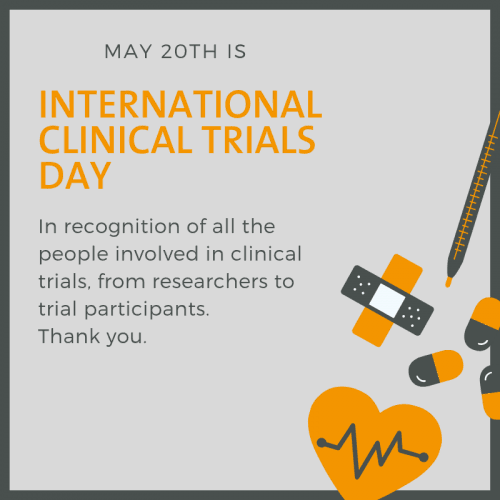
https://www.australianclinicaltrials.gov.au/international-clinical-trials-day